Showing posts with label books. Show all posts

Monday, 16 April 2018

Blog survey for writers: 8. What's your favorite genre to write? To read?


So, I guess I'm back from a year's hiatus. I didn't plan it, and I have no other excuse than I didn't feel like blogging. My last year of university was eventful, sometimes a little too much so, and my attention was everywhere else but this blog. But, I have graduated now, with a master's degree in theology. Maybe I will write a couple of blog posts about last year, to finally process what has happened, but this time I'm starting with something simple and totally inside my comfort zone.

So, continuing my old survey:

My favorite genre to write and read falls somewhere in the realm of speculative fiction. It's fantasy-esque, SF-esque, historical-esque, mystery-esque, and preferably more like an exploration of characters and relationships, often a little lighter on the plot side (not always) than a fast paced and action packed thriller. I enjoy freedom and room for interpretation with things like time and place, but am meticulous with characterization and interaction.

I guess I could just call it fantasy, but that would be misleading. Because I'm not necessarily into it for the things most often associated with the fantasy genre. Sure, I sometimes enjoy world building, but I prefer to let it a bit more (sometimes a lot more) loose than most fantasy does. And I love magic, but my attention is more in coming up with everyday uses of it, small and handy stuff, than epic world shaking spells. That being said, I do go against these preferences from time to time.

I guess my genre could be called something like "elaborate fairy tale". Haha. Since I don't know if there is an actual word for the subgenre I mostly write in. I would guess no, since I don't think I find books like mine sitting on every other corner. Or maybe I am always looking from the wrong places. I would like to read more stories from this narrow category... In that aspect I'm pretty simple. I like to read what I like to write.


Here's a picture from my most fantasy-loyal story, to describe what most of my stories are like. The character is the only clearly defined thing, and the focus of the story. Everything else is the background, symbolic, up for interpretation and even surrealistic.

If you have any books in mind that sound like this, would you please be kind enough to point me in their direction? Thank you!


Thursday, 1 September 2016

This is going to be random


Here's a thing:

I should blog more about random things that are on my mind. (Or write my diary I guess?) Because if I don't write them, I'm never going to process them out loud either.

I used to have this dumb notion that I should only blog once I have something important and universal to say. (I had to let go of that thought to even start a blog, otherwise nothing was ever going to be important enough.)

Besides what's the point? Most people who read my blog are my friends anyway.

And the reason I don't blog that much is mostly that I think about what I say too much. (Which doesn't necessarily equal quality.)

But right know the thing is that I'm so busy I'm not going to be able to blog at all if I think too much about what I say. I have possibly the busiest period ever in my school life going on right now.

I think I have to learn to get my thoughts out without being too critical about them. I mean, it should be okay if it doesn't always make sense. It's better to say something incoherent and reflect, and learn from it, than not say anything at all because every thought has to be "finished".

There are definitely a few things that keep coming back to haunt my mind even during these busy days, because I haven't really chewed on them by writing about them. That's how you can always see things in a new light afterall!

Good blogs are probably the ones that can get something general and relatable out of personal experiences, but right now I think I wouldn't mind not having that kind of standards for this blog. (I can try to do that with my typology blog if I want.) And even personal ramblings can be relatable, and I think they have their own value.

I'm not exactly sure where I'm going with this post, which feels oddly refreshing already. :D

I feel like overviewing some of the things I have in my mind but never put anywhere.


1. Books and other fiction in general

Have some bad cosplay I'm doing of my own character reading here!


I haven't had time to write proper reviews! And it makes me restless when I don't. I feel like there's a stack of books and series just waiting and waiting and getting heavier in the back of my head because I haven't gone through my love or hate or indifference for them, in a really satisfying way. I need to break them into pieces to let them settle to their rightful place in my mind.


2. My summer jobs

I had two this summer, and I definitely haven't gone through such a multifaceted work experience like... ever? At least not in a period of two months! I did talk about a couple of things that happened there with some friends, but my life has been so busy, I feel like I haven't really been able to digest it all. It's weird, because I kind of went through the highest highs and the lowest lows in my personality during these months... and they're all things I knew about myself but these jobs made me reinforce my understanding of them. I guess many of my problems and strenghts haven't been so... in my face? Not for some time. There's still stuff to think about there. (And it would be good now that I'm about to start an internship.)


3. The big career choice questions

Am I too liberal to work in a parish? Is the fact that I can talk about the matters of faith in "lutheran language", enough to actually call myself lutheran, when I could also talk about them in pretty much any "religious language" (and non-religious as well), and I only feel most at home with the lutheran one, because it's one of the "loosest languages"? Is the fact that I could definitely be understood as an atheist, a monotheist and a pantheist, or pretty much anything else, simultaneously, depending on your understanding and use of the terms, too impractical for a priest? I'm very content in my worldview but am I content in this environment? Is this the right place to do what I want to do, to help people? I guess this school year, and the internship, will answer that question. I hope.


4. Typing

I've said this before, and this relates to my other blog, but I need to start writing my fictional character typings. It's no good to just analyze them in my head, and since I'm going to do that anyway I should at least start getting some of them out of there. To stop thinking I need to be able write my reasoning perfectly. The whole thing about typing characters is to learn more about the theory. To make the understanding of it more accurate and articulate.


5. Kuroko no basket

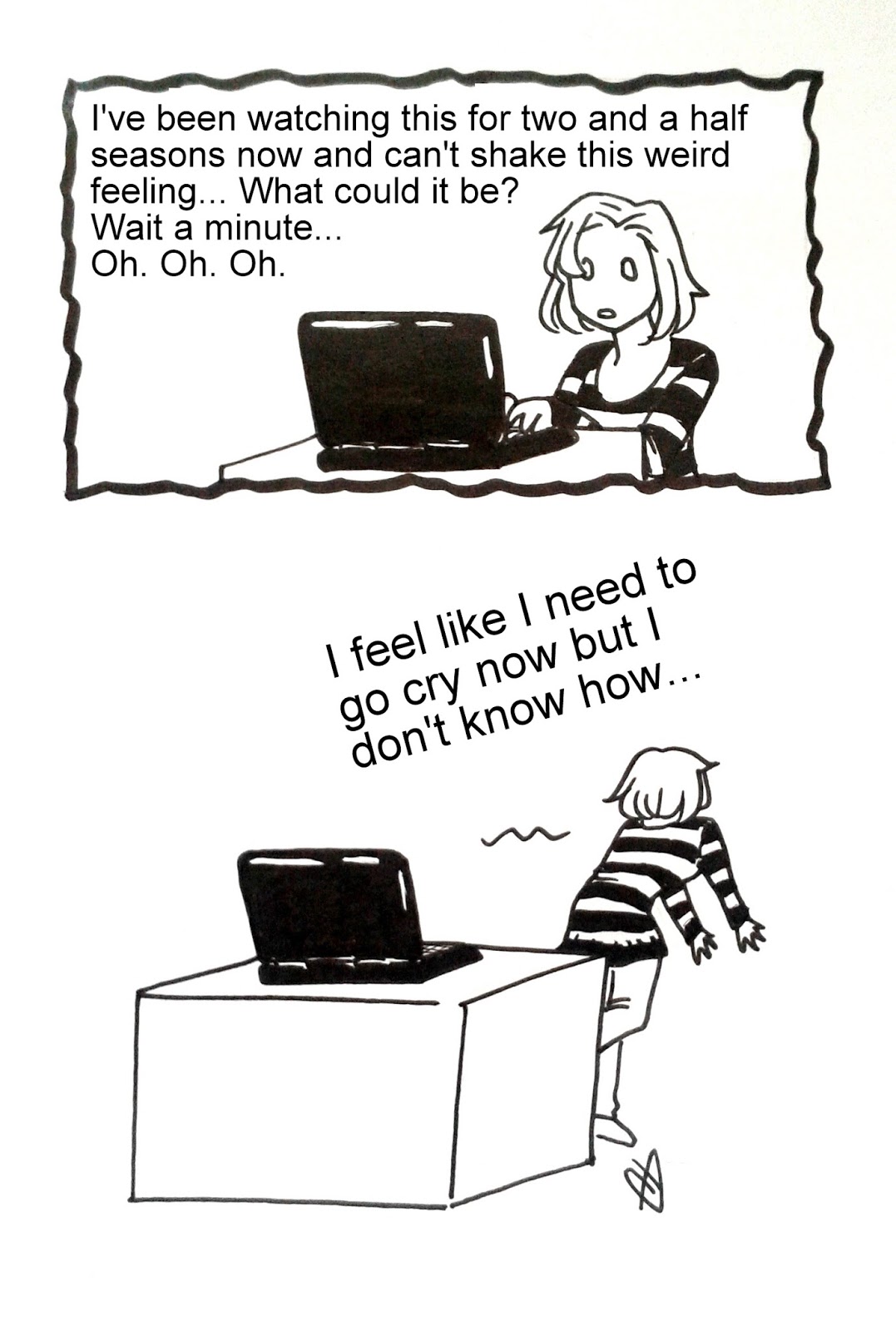
Yeah, really. I didn't want to admit it, but this series has had more impact on me than any other since Harry freaking Potter. And the reason I didn't want to admit it, is because it hits a little too close to home. I've never related to a fictional character as much. (For the record: No, it has nothing to do with basketball. It has to do with... everything else. Everything that can be applied elsewhere, if that makes sense.) The thing is, until now I don't think I've ever been so aware if I relate to a character or not, because it never seemed relevant to me. It's not my comfort area to know that. I like to empathize with characters, not sympathize. I don't generally like the feeling that I'm seeing myself in there. So I have a love-hate relationship with this series. Something brings back painful memories? Easy, right: Don't watch/read it. But when I think that, I realize it's also surprisingly satisfying to feel understood. So... apparently there's still a dilemma there I need to work on.

It really was something like this at first.


6. Daily thoughts

I often find myself thinking there's some general phenomenon I'd like to write about when stuff happens during the day that relates to something like that, but then I never write about it. I forget, or there's too much going on, or I, AGAIN, feel like the thought isn't finished enough. My little inner perfectionist needs a kick or something.


7. HSP

I read Elaine Aron's book on the Highly Sensitive Person and related immensely, but, again, I feel like I haven't really had time to process this subject either (other than crying every other page and recommending it to other sensitive people). I have to have time to analyze this whole thing to pieces so I can really benefit from it.


Okay... this was really random. And really personal. I'm not saying I will blog about any of these things, but I do promise myself to write all my thoughts about them out in my diary at least.

Maybe it's not so bad to write something so personal though. Because I would really like to read things on similar level from other people's blogs!


Friday, 19 February 2016

Fairytale retellings!


I'm not a huge reader of fairytale retellings but I am endlessly fascinated by the idea. I don't read them that much for the same reason I don't read fanfiction: I tend to like my own interpretations the best. Eh... However, I feel a lot less guilty interpreting characters that are thought to be somewhat common property, more like part of some common literary consciousness than actual characters. In most cases they appear to be archetypes, symbols or roles rather than human beings. And that's why they're a big part of my foundation in writing. I do write actual retellings sometimes, but more than that I just feel like I'm constantly interacting with classical fairytales as a writer and a reader.

I love to see how a character carries the ”spirit” of a famous fairytale character. I love it when a character has aspects of many of them. It doesn't really matter if it's intentional or not, I like to play with those thoughts anyway and find new meaning and relationships between what I'm reading or writing and the ideas in fairytales. I can't help but think about Cinderella and The Little Mermaid, when I'm reading about Fanny Price in Mansfield Park. I'm always reminded of Little Red Riding Hood in The Hound of the Baskervilles. I find Snow White and Rose Red in The Hunger Games. And I'm aware that most likely none of the connections I find were intentional and I admit that in the allegorical realm my thoughts are very likely to go a bit over board. That's probably one of the reasons why my head makes up stories. If the connection I make between separate stories seemingly only exists in my head, then there obviously is another story somewhere between the old ones that still needs to be written. That being said, I'm probably not clueless about when the author has made the connection intentionally, either.

Recently, I've been writing a collection of short stories, some more and some less based on fairytales. So, that's were all of this is actually coming from. I noticed I was instinctively using pretty distinct types of retelling and interpreting, so I might as well write about that. There's probably going to be some overlap and it's likely that most books will fit into more than one category, but... I'm just writing this for my own reflection. And who knows, maybe this list will benefit someone else as well.

The rest will contain spoilers.


1. Expansion

This type is probably fit for those who excel at writing settings and characters, since plot-wise it's not meant to be surprising. If you think of the original fairytale as puppet theather, this type of retelling is going to take that exact piece and make it into a full-lenght movie instead. The point is to tell the same story but make it somehow deeper, more detailed, more nuanced. To bring out actual persons from the cardboard characters, actual worlds from the vague fairytale lands. If the plot is very simple it might be made more complicated, but essentially the story remains the same from beginning to end.

Whether or not I like reading these comes down to the characters. But if you can turn Sleeping Beauty into a person from a plot device, I'm all in. I think it really takes talent to write this type of story as if it was all original, when basically everything from the fairytale is kept the way it is.

I think some good examples of this type are The Goose Girl by Shannon Hale and Tender Morsels by Margo Lanagan. Both are great books in my opinion and if you're not too familiar with the tales of Goose Girl, or Snow White and Rose Red, I actually recommend you to read these books before the original tales. Because they follow the original in such detail, they don't require any knowledge of them, and that way there's a lot more suspence.

Maybe, depending on your preferences, the fact that this type follows the fairytale can be the book's greatest strength or greatest weakness.


2. Twister

This type usually changes major aspects of the original tale, sometimes only a few, sometimes more. What I see as the point, or would set as the basic rule, is that the source story is obviously recognizable without it being stated. That way the contrast is greater in relation to the aspects that remain the same. The whole story may be born from one question, like: What if Little Red Riding Hood was the wolf? What if Cinderella's stepsister managed to fool the prince? Or it may be inspired by a notion that something in the original story isn't quite believable, or doesn't apply to our time, or would be just too hilarious the other way around, or is always one way so that's a reason enough for it to be another way. One way or another, it makes twists to the original tale.

I think these stories have a danger to fall short if the writer is only interested in their twists and the rest of the story is left underdeveloped because it's not that interesting. This type will probably work the best if you are as intrigued by the original story as you are by your new idea, and use it to strengthen the original in some way.

The simplest example in this category would probably be something like Disney's Little Mermaid, although there's hardly much thought behind changing the ending so that the mermaid gets the prince. Marissa Meyer's Cinder (since I haven't read more of the Lunar Chronicles) is a better example. It's definitely Cinderella, the story is there, but almost every aspect of it is twisted in one way or another. Starting from Cinder being a cyborg.


3. Translation

These can seem really similar to the Twister type, but the point isn't in making the story different from the original, but ”translating” it into another world, time or context as analogically as possible. I have to admit this is one of my two personal favourites. I especially like ”the modern day adaptations”, when they're done well, and I can't count the times I have written them myself, based on fairytales but also on other classics, such as Shakespeare's plays.

The danger with these stories is that they might get stuck on a level where they're entertaining but nothing more. This usually happens when the cleverness of the analogies becomes the main focus: the story falls flat because it's just a replica of the original, there's no deeper meaning behind why the story needed to be transferred to another realm. Ideally, every analogy should be there because it says more/other things than the original story, without changing the storyline.

I think the movie Cinderella Story is a good example of this, though my memory of it isn't very clear. I think the glass slipper was changed into an MP3 player and the ”prince” of the school tried to find the girl by asking which songs were first on the playlist.


4. Blanks Filled In

This is the other favourite of mine! It's similar to ”Expansion” but somewhat less loyal to the original story, in the sense that it doesn't change a thing about its basic plot, but it takes complete freedom everywhere where the original doesn't reach. Wherever things are left untold, there's a blank canvas for this type of retelling. With enough blanks filled in, the whole meaning, or interpretation of the story may change. The Stepmother may not look so evil after all, or the prince may not turn out to be as Charming as you'd think.

The trap with this type is overanalyzing. There definitely is such a thing as too much interpretation. It's not going to look very convincing if it seems that everything that looks like one thing in the fairytale, is going to turn out to be the exact opposite in the retelling. Contrast here is as important as ever. 

The movie/book Red Riding Hood is mostly this type. The original tale has a pretty minor part in it, but it's all there. What happens before Red Riding Hood goes into the woods with the basket, and why the wolf is interested in her in the first place are the main focus of the story.


5. Story Inside a Story

This is basically when an insignificant part of a tale inspires their own story. Often it is a minor character. This can easily get so far from the original it's not really a retelling anymore but I think it qualifies when the plot of the fairytale is observable from the context of the story, even if it's happening away from the time and place of the original. Also, this may often be basically the same thing as the ”Blanks Filled In” or even ”Expansion” but I think it deserves it's own category because its focus is more singular.

The hard part in this type is how integrated it should be with the characters, the setting, or the plot of the original story. Common ground is important, but the story should probably be able to stand on it's own too.

I've failed to think of actual fairytale retellings of this type, so let's go with Lavinia by Ursula Le Guin (based on The Aeneid). Lavinia is only briefly mentioned in her husband's story but in this book she has a whole life.


These are the five basic categories I could come up with. Someone might want to add categories that I have excluded, so here's some of them:

Cross-overs, like Wildwood Dancing by Juliet Marillier. The story mixes elements from The Twelve Dancing Princesses and The Frog Prince but I think it makes more sense to analyze it as ”Blanks Filled In” or an ”Expansion”. The fact that there's elements from more than one fairytale seems less relevant within these types of categories.

Stories that use allegory, like As Red As Blood by Salla Simukka. There's definitely a lot of elements from both Snow White and the Seven Dwarves and Snow White and Rose Red but the story would make total sense without the reader ever noticing the parallels. These types are not really retellings.

Stories that are ”off-springs” of a fairytale, like Throne of Glass by Sarah J. Maas. Apparently, this book started as a retelling of Cinderella and you can see the parallels especially in the beginning, but it takes it's own course pretty fast and as the story develops it pretty much has nothing to do with Cinderella anymore, so...


That's all I have for now! I do enjoy this topic and there's some fairytale retellings out there I'm quite eager to read... so, untill future explorations!


Wednesday, 6 January 2016

Reading Year 2015


Apparently I became too busy to review every book I read after summer (or just couldn't find the inspiration?). All I can say as an excuse is that I had a really great semester school-wise and ballet-wise. I also tried new things the university sport services offer and completely fell in love with combat (which isn't going to be available next semester... *cries*). Of course I wish reading and writing didn't have to suffer for it but it's evident I read 34 books less than last year and wrote... well it's harder to count since I did so much editing before this semester but I only wrote around 30 000 words of fiction this fall. And almost all of it during one weekend. Oh well.

I meant to continue reviewing books anyway, so now that the year is done I thought I'd just wrap it up with TOP 12 of 2015 (because I couldn't narrow it down to 10) in no particular order and including comics.


Musta Kuu (Black Moon)
Mia Vänskä

Why: Because it's horror where the horror isn't the point. It's just very good character driven fiction were everything is wrapped together with a horror string. You never know where the line between psychological and magical is, you can't be sure if it's people's traumas and personal problems or unnatural powers from the outside that cause everything.


Recommended if:
  • You'd like to read more horror but it's usually too plot driven for you
  • You like to explore and understand characters' personal problems
  • Horror-wise, you aren't afraid of a little bit of kitch
  • The atmosphere makes the horror for you, more than action does
  • (You can read Finnish ^^')

Not recommended if:
  • You need a complicated mystery in horror
  • You can't stand angsty characters
  • The Red Head cliché sends the book flying to the wall


The Book of Flying
Keith Miller

Why: Because its fairy tale -ish style inspired me to write some fairy tale inspired short stories I'd been thinking of for a while. The story itself was entertaining and had memorable moments, but what I really fell in love with was the writing style. It's like music. Definitely the kind of writing you forget consists of words at all.

Recommended if:
  • You love fairy tales
  • You like to have a lot of room for interpretation

Not recommended if:
  • Poetic style puts you off
  • You hate the episodic adventure structure


The Golem and the Djinni
Helene Wecker

Why: I loved the slow pace of the novel, I never wanted it to end. The way every side character's story was given enough time was great, it made even infodump work, everything was a pleasure to read. Still, the best part was the Golem and the Djinni's journeys in learning the human ways, down to every little detail.

Recommended if:
  • You love to wander in a book's world
  • You love to drown into many different characters' inner worlds
  • You generally like stories where something that is ordinary to you is seen, in detail, through the eyes of someone who is unfamiliar with it

Not recommended if:
  • You don't like the past to be revealed to you in flashback, bit by bit
  • You often think ”get on with the plot!” when you read


Kuroko no Basket
Fujimaki Tadatoshi

Why: The games. The characters. Because both are great and neither is compromized because they're essentially one. Because it's hard to find a story where everything, characters, plot, drama, comedy, seriousness and ridiculousness, is in such a perfect balance.

Recommended if:
  • You love sports manga with ridiculous abilities
  • You feel at home with borderline corny/cliché when it makes sense with the characters
  • You don't mind reading basically fantasy in reality disguise
  • You basically read for feels...

Not recommended if:
  • You read sports manga for the odd training methods more than for the games
  • You can't compromize the laws of physics
  • Happily Ever After puts you off


Love
Toni Morrison

Why: It's tragic and I like it. 'nuff said. I mean, it's so well written I couldn't put it down even though I usually avoid too sad books because they will haunt me. Same happened with The Bluest Eye by the same author. It's distressing enough for the themes but not so exhausting I don't want to see it again. And that takes talent.

Recommended if:
  • You approach certain award winners with precaution because you're sensitive, but wish to read them anyway

Not recommended if:
  • You often want to jump into the book to scold the characters because you'd handle their lives so much better


Lovely Bones
Alice Sebold

Why: At the beginning I was afraid I couldn't read it because the murder was so horrible, but I soon realized this book was full of hope, humor, understanding and authentic characters. I'm so glad I didn't give up on it, it's definitely in the top 3 of the year. It was just such a blissful read. I don't seem to have anything cohesive to say about it. You just have to read it to know.

Recommended if:
  • You'd like a different viewpoint on tragedy and loss
  • You're interested in the themes of thrillers/mysteries but don't often find the depth of human nature in them

Not recommended if:
  • Supernatural elements make you unable to take a book ”seriously”
  • You need a thriller type of conclusion to murder


Lumikki Trilogy
Salla Simukka

Why: I find it very connected with the classic fairy tales it's based on and with its genres' classics, and yet it's also completely able to stand on its own. Lumikki's (Finnish for Snow White) character is definitely the driving force and I would've liked to read so much more about her. The interaction with her subconscious is written unusually well.

Recommended if:
  • You like fairytale symbolism
  • The thrill of a thriller for you is in the character's psyche
  • You like to pick up the characters' personality from small cues and details

Not recommended if:
  • You read thrillers for what happens, not who it happens to
  • You need a complex mystery in the external world of the story
  • You don't enjoy filling in the blanks, character-wise or action-wise


The Quantum Thief Trilogy
Hannu Rajaniemi

Why: I don't expect a space opera type of story to have very well developed characters, so I was prejudiced against this book but oh my this one does. It doesn't fall short in anything, as far as I'm concerned. It has the perfect characters, plot, world building, societies and even all the technical details were super interesting to me. I suppose it's because everything was so well connected you couldn't get bored with one aspect of it if you didn't with another.

(Oh, I'm cheating a little here actually, I just bought the last book so I haven't read it yet...)
Recommended if:
  • You love complex and detailed world building but often find it getting in the way of the story
  • You like all your characters gray, and you like it obvious
  • You like the narration to give you clues on how to build your own world in the story, rather than having it describe everything in the exact way you're suppose to imagine it

Not recommended if:
  • Grand schemes and revelations put you off


The Stranger's Child
Alan Hollinghurst

Why: I often lose my interest for a while after every timeskip in books that have many, because I'm still hangovering the old characters when the new ones come into the picture. With this book everything was connected in so subtle ways every viewpoint was equally interesting from the start! I also found it very realistic how the characters' constructs of what happened were based on their idea of consistency but the truth was always scattered in all of them in ways they couldn't imagine.

Recommended if:
  • You love to explore the same thing from different angles to the point were it's probably ridiculous
  • You aren't inclined to lose your faith in the human race

Not recommended if:
  • It irritates you to know more than the characters
  • The idea that everyone is obsessed with an evening, a person, a comforting lie or some other detail for 500 pages makes you dizzy


Throne of Glass Series
Sarah J. Maas

Why: It's full of fantasy clichés, the plot is hardly ever surprising, the writing is often corny especially with all the adjectives and STILL, through the characters it all just makes sense. The characters are people you just really need to know because they are written so well that all the old tropes are interesting again. This is the best YA fantasy series I've read in years.

(Haven't read the latest book yet though.)

Recommended if:
  • You're often dissapointed with YA characters but wish you weren't/ often seem to pick up fantasy books where the too straight forward plot doesn't leave room for character developement
  • You love the style that effortlessly moves between serious and humorous (like Harry Potter or Percy Jackson)
  • You're sick of YA heroines without personality
  • You don't mind feeling like the author is trolling on the characters/ sarcastic narrative

Not recommended if:
  • You need to be surprised to enjoy the plot
  • You can't read cheesy scenes no matter how much sense they make
  • You think deus ex machina is to be avoided at all cost


Will Grayson, Will Grayson
John Green, David Levithan

Why:”I'd pick you. Fuck it, I do pick you. I want you to come over to my house in twenty years with your dude and your adopted kids and I want our fucking kids to hang out and I want to, like, drink wine and talk about the Middle East or whatever the fuck we're gonna want to do when we're old. We've been friends too long to pick, but if we could, I'd pick you.”

Because feels.


Recommended if:
  • You want feels
  • The Fault in Our Stars and Looking for Alaska were too sad
  • You liked Boy Meets Boy

Not recommended if:
  • You don't buy it when everyone is happy and loves each other


xxxHolic
CLAMP

Why: It was so interesting I read it so fast I hardly remember anything about it and I need to read it again to know why exactly it was so great.

Recommended if:
  • You already love the CLAMP-verse
  • You don't mind it when they crush everything you thought you could still believe in


Not recommended if:
  • You haven't read CLAMP before
  • You only like Card Captor Sakura or Magic Knight Rayearth type of CLAMP
  • CLAMP is already too confusing for you
  • Wounds you got from any other CLAMP series are still easy to open


That's it. ^^'

Wednesday, 19 August 2015

Enna Burning and Elements


WARNING: Very random personal rambling.


This is the first time in many months that I've finished a drawing that I a) did just for fun b) put enough effort into so that it's worth of putting online anywhere...

This is not because I've been lazy though! It's because for the past six months I worked on illustrations for a fantasy manuscript of mine (on the side of working on my degree work and other school stuff and editing the fantasy manuscript maniacally, eheh). I ended up drawing over 40 pages of them, redrawing a lot and finally keeping over 30 pages. Now I'm waiting for rejections...

Anyway, I was rereading Enna Burning, a very awesome, inspiring, heartaching and understanding fantasy tale by Shannon Hale. And I rarely draw fan art too, but I remembered how much I love Enna, the main character, again and I just had to draw her. I'm actually semi-happy, almost quite happy with how she turned out.


I took some liberties with the fire... She doesn't actually throw it in the story like she seems to be doing here, but more like burns things with thought. You can just imagine she threw something in the air before burning it, if you like. Because I was shameless and just wanted to try to create this cliché visual effect with the fire. It was fun.

I think I've improved my watercolour technique. A little bit.

Reading Enna again made me think about elements quite a bit. Mostly relating to people and my fictional characters. When I was younger, I used to type people by elements all the time. I had always typed people according to my own subjective categories, long before I ever came across personality theories like MBTI and Enneagram which I'm currently obsessive about. I typed everyone by colours, flowers, stones, planets, animals, mythical creatures, you name it. I didn't really think about it as a kid, but that was my way of supporting my memory and people skills. You know, it was just an association thing that helped me sort out my understanding of others. ^^'

But it was in second grade when I really got into elemental typing. It was because I started reading W.i.t.c.h. comics. (If you're not familiar with it, it's a story about five girls with elemental superpowers, the fifth element being "energy".) I read it as my comic bible for five years or so. It was hugely popular for a while. I mean, who didn't have their own W.i.t.c.h. gang? Everyone had to figure which one of their friends was which of the girls/ who used which element. It was kind of fun. (For some reason I was never one of the five though, but I was assigned as their friend Elyon who didn't use any element but rather random magic. Apparently I just didn't have the personality of any of the W.i.t.c.h. girls. I can sort of see why. I was never the funny one (Irma), the strict one (Cornelia), the brains (Taranee), the wild one (Hay Lin) or the leader (Will).)

In my head I didn't actually type people according to W.i.t.c.h. girls or the logic of elements in the comic. I went more with looking for the quality of the elements (according to my logic...) from their personality and behaviour and only used the four commonly included elements. (Though I didn't voice these typings.)

Looking back to it, I had plenty of fire around me. Raging fire, supressed fire, emerging fire. I think I was attracted to it because there was always next to no fire in me. I didn't always have the smoothest relationship with it. Although it was generally rare for me to make anyone mad, I can see why someone would get frustrated with my lack of agressiveness.

Which brings me back to Enna. She's definitely not the only fire representing character I'm so fond of (No, there's... so many of them.) but I think she does it very well. The idea that there's something in you that can turn into a destructive force and engulf you and everything you love is so well brought out in Enna's character. How addicting the power can be and how hard it is to keep it under control. And ultimately, how you can only find the perfect balance by having other elements both in you and beside you. Which applies to all people and elements of course. : )

Haha, so I guess that's it for the element rambling. I haven't really typed people according to elements in at least six years but this book took me back for a bit. And I can see why typing fictional characters like that can still be helpful, although it may seem rather simplistic. It can help articulate the impression you want to give. Not sure if I'm going to invite the elements back into my system but I guess I'll see about that.


Tuesday, 4 August 2015

July Reads


The Hunger Games
Suzanne Collins

I recently reread the Hunger Games and it was even better than I remembered! (Probably something to do with the fact I first read the Finnish translation...) Had to raise it from four to five stars. (Also I bought this beautiful foil edition, woah! It's amazing!)

Katniss is a really outstanding protagonist, she has an amazingly distinct voice. Often when I read in first person, it somehow seems to me that the author is trying a little too hard or not enough. But Katniss' story and personality comes through perfectly from her own point of view. I actually used to have a problem with the present tense (for some reason I never came accross it when I was a kid, so that's probably why...) but the Hunger Games is what ultimately got me over it when I first read it! I used to feel the present tense was too "in your face" but in this book it was really captivating from the first to the last page, even the first time around.

The characters in general are the best aspect of this book to me (which is how it should be, for the most part). I almost wished that Katniss wouldn't have to participate the Games, not because it's freaking traumatic but because I had to leave District Twelve and not see the life there, the life of her mother, Prim and Gale and especially Madge. For some reason I always really wanted to know more about her.

But, it never really interrupted my reading anyway because everything that happened to Katniss held my interest all the time. It didn't matter whether she was almost getting killed, or climbing a tree, or describing the food she ate in detail, not one sentence ever seemed irrelevant or uninteresting to me. Every scene was as interesting to me as another, just because it all happened to Katniss. That's just how vividly her experience has been written.

If you ask me, that's what makes a perfect protagonist. If the reader just cares about everything she sees or feels or tastes and doesn't even have time to question why.


Ilmeetön mies (The Expressionless Man)
Anu Holopainen

This book is about a woman who struggles to make her life meaningful and let go of her painful past. Sometimes she manages to see the daily necessities in a more romantic light but then it all seems to be in vain again. Almost accidentally, she develops sort of a one-sided relationship to her neighbour, a man who doesn't seem to have friends or work and who never speaks a word.

Well, I wasn't a huge fan of this book. It had some rather well described characters and the main character's feelings were believable but they never quite reach the depth I seek. This has actually been a problem to me with this author before too, even though I love her fantasy series and rated some of her books five stars even though I felt so, because they were otherwise so outstanding to me. That's why I picked this book up in the first place, even though it screamed the kind of comtemporary fiction I don't usually enjoy (even if it has a tiny bit of surrealism).

I felt this book had some interesting ideas but none of them were really followed through. They were just dropped here and there and altogether, what little conclusion this story had, seemed to be in all the wrong places. The descriptions of loneliness, apathy and depression were believable, even captivating for some short moments but then it went flat again. Nothing really grows through the whole book.

And, to be honest I thought the ending was plain cheap. Before the end, the book was about the main character's internal struggle. And then suddenly it was about the scandal in her past. Don't get me wrong, it makes perfect sense that something like this had happened to her but it wasn't carried out well. The weight of the story was suddenly on the event itself, like the author was too lazy to go through it with the main character and just trusted the event to be scandalous enough in itself so the reader would stay interested. Like we're supposed to go all *gasp!* because what happened shocks us so much we won't even pay attention to how the character actually feels about it anymore. To me this feels like looking down on your readers.

And the ending. Ugh, are you kidding me? I can't tell if it was a cliché on purpose (which would also qualify as looking down on readers) or if the author hasn't read any depressing comtemporary novels in the last couple of decades. Didn't feel organic to me in any streatch of imagination.

Before the ending the book was very readable though, and managed to stand up to its genre's expectations in some sense. I have to say, that this overly pessimistic style of narration you see plenty of in comtemporary novels, wasn't so repulsive to me in this book. I mean the kind of narration which makes every ray of sunlight, every hair in the sink, every item in the fridge and every chipped coffee cup look like The Ultimate Proof That Life Is Miserable. I mean, sure in some cases this fits the style because the character is really depressed. But in many cases, the style itself seems to be the whole purpose of the writing and more often than not, so pseudo-artistic it's nauseating. But actually, in this book, it wasn't so all-engulfing. The main character seemed like a real person, not a tool for this style and in her most apathetic moments, this feel in the narration actually made sense.


Carrie
Stephen King

I've been meaning to read Stephen King for a long, long time, so when I found Carrie super cheap I figured it was finally time. (If it wasn't super cheap there's no way I would've bought a movie edition... but luckily this one isn't that hideous.) Also I figured it was only fitting to start ”from the beginning”, with the author's debut novel.

Now I can finally say, that everyone has been right, Stephen King really is an amazingly talented writer and I can only expect more from his later work. I'm really impressed that someone can make me love a book that isn't primarily the intriguing, mysterious kind of horror but the disturbing, actually horrory kind that gets under your skin.

Carrie is a telekinetic girl, who doesn't have it easy in school or at home. Her mother is abusive and sickly obsessed with her religious believes and other girls bully and shame Carrie at school. Eventually, all her traumatic experiences turn her power into something destructive.

The idea and the plot may seem really simple, but I guess that's were great writers can really shine. There's no need to try to make it more interesting by adding complexities when you can write great characters who are fully able to carry the story on their own. Everyone in this book has been written so realistically even the supernatural elements were never able to make the story feel more distant, they never stole the spotlight from the characters, because they were always part of the characters. Because Stephen King totally knows how to raise the horror from the human being.

I was also impressed at how well the varied ways of narration work in this book. They really managed to carry the story on without ever killing the atmosphere.

The ending probably does feel like the biggest cliché to a reader of my generation but I'm guessing maybe it wasn't a cliché when this book was published in -74.


The Stranger's Child
Alan Hollinghurst

Well this book turned out to be something completely different from what I was expecting. It was thoroughly enjoyable, though I have some questions and things I didn't fully get probably because I'm not british and not knowledgeable enough about the culture.

The Stranger's Child starts with the first encounter of two families and after that they are bound together through the decades the story centers on these families and their circles. It shows how their lives are interpreted and reinterpreted and how the one evening that started it all keeps coming up both in the right and in the wrong contexts.

I really enjoyed the episodic structure of the novel and how every part was like a new book (which I usually don't enjoy very much but here it was done just right) and how loosely everything was related and how the history kept repeating itself in so small ways that all felt like both, irrelevant and so significant in the end. Like the book fully noted both the worth and the unreliablity of subjective experience. The extend to which every character inserted themselves into their interpretation of everyone else was really well exposed because it did acknowledge the mistakes they might make but they also showed that "self-inserting" sometimes brought out things the other people probably should have considered. So it also showed that subjectivity doesn't mean false, that bias is inevitable which is sort of why it deserves credit. I don't know how to put it better right now.

That's probably why I loved the book, in a nutshell. All perspectives were so very well considered in it.

It was also very easy to start following each new ”protagonist”. It often happens to me that I'm still missing the old protagonist half way through the next one's story when a book has a sudden time skip. I guess it's because in this book the characters' own agenda and their interest in the previous central characters worked together so seamlessly.


Haluatko todella kirjailjaksi? (Do you really want to be a writer?)
Jera Hänninen & Jyri Hänninen

This is sort of a guide to the Finnish publishing world but it reads more like an intentionally cynic book of jokes. It was entertaining. Not very enlightening. I don't think it really answered the kind of questions the aspiring writers would really have about the industry. It was more about random trivia and making every editor, publisher and writer seem like they never have any clue about what the hell they're doing.

However, some part of the dictionary might turn out to be useful.


Orlando
Virginia Woolf

I finally read Orlando, the famous story that starts with a young boy whose life changes dramatically when he turns into a woman.

I was actually surprised about how much I enjoyed reading this book. I don't usually match so well with stream-of-consciousness fiction because I get in the "stream" too but my thoughts go to completely different direction from the author's. And then I realize I don't remember what I read for the past three paragraphs. However, that didn't happen so much with Orlando. I guess the book just never wandered so far from what I thought was interesting in it.

Another thing I don't usually enjoy that much: biographies. But this book basically trolls on them. It probably breaks every possible rule there is but it still kind of is a biography and it's not even entirely fictional, it seems.

I loved how it was barely noted that Orlando didn't age like the centuries passed and how the reader was sort of assumed to take other peculiar things at face value too.

I also really liked it when the narrator figured that Orlando wasn't doing anything worth mentioning at the time and stole the spotlight for philosophical ramblings. It kind of makes it feel like the narrator is watching Orlando at the present moment all the time and only pretending to tell things from the past. After the narrator mentions that we've reached the present moment it seems like the superficial following of the form of biography is completely forgotten and the narrator is just in Orlando's head.

Somehow, the way Orlando's gender changed felt really out of place with all that mystical stuff. I don't know if it was intentional but I could definitely see it that way, maybe pointing out how the context can make the same stuff really engaging or really ridiculous.

The whole picking on gender norms was hilarious too, it reminded me slightly of Jane Austen sometimes, (although the style in general is pretty far from hers). I think Orlando was just perfectly written in that sense, he/she didn't really change at all but at the same time did change, if that makes sense. Sometimes, when people want to emphazise that men and women are the same, they completely ignore that society's expectations also play a role in one's identity and then some who want to emphasize the differences seem really stuck on the superficial level without understanding human nature at all. Well, to me it seems that Woolf totally understands the relationships in all of that.

I knew something of the book being thought of as a "love letter" from Woolf to Sackville-West but I didn't dig into that topic, because I didn't want to be seeking parallels any more than I was. Even if the book was intented as such, it's probably also intented for anyone to read as it is on its own so I prefered to read it without knowing too much.


So... altogether July was pretty good, though I had a bit of a reading slump here and there (First the Stranger's Child saved me from it and then Orlando...) Next month I probably won't be able to read very much because I have quite a bit of school work to do but I'm eager to reread some more of my favourites, so let's see.


Sunday, 12 July 2015

June Reads


Hmm, last month I said I'd focus on reading fun books in June! But obviously my reading moods aren't that predictable. And even if I have a silly plan like that I don't hesitate to change it and read whatever I feel like reading, so... :D Let's see how fun June was anyway.


Maresi: The Red Abbey Chronicles  
Maria Turtschaninoff


Maresi is the Finlandia Junior winner of 2014. So, no, I wasn't even expecting this to be what you'd call a ”fun” book, because let's face it, the biggest award winners never are. However, it was definitely not as dark or angsty as I expected. The general tone of the book is actually pretty positive, it's hopeful, even empowering and never actually fully reaches the horror the beginning seems to promise. I'm having a hard time deciding whether this is actually a good or a bad thing for the book. I mean, I'm forever for happy endings, so the less the dark promises are kept the happier I'll be, but it's obviously not like that with everyone. I can imagine many people feeling betrayed by the beginning. (Although, critics don't seem to have much complaints either, so how about I just rest my case and be happy with happiness.)

Other than that, I wasn't really as impressed with this book as I'd hoped. It wasn't bad but it never stood out to me in any particularly good way either. Sure, it explored a wide variety of themes teenagers face in their life in this day and age and the historical-esque, fantasy-esque setting of the book but... that's pretty much it. And basically the reason I'm skeptical about many award winners. It's just so often that critics favour books with controversal themes (through safely conservative lenses) even if that's all the book is, when the themes are just that; a convient collection of topics and don't grow organically from the characters.

Sadly, this seemed to be exactly the case with Maresi. The characters, their relationships, their personal histories... all felt plotted to tell a story that illustrates the themes of matriarchy/patriarchy, religion/faith/practise, violence/abuse/trauma, education/poverty etc. All of these were raised as almost annoyingly discreed questions in the book and since it was combined with a plot copied and pasted straight from The Coming-Of-Age Story or something, it kind of left me feeling pretty much nothing. It just feels too calculated and crafted to evoke strong emotions.

Even the characters are like that. Like the author completely internalized the theory of creating characters and then followed that knowledge flawlessly with every one of them but forgot that the characters are supposed to come from the author's intuition and not from the page of a writer's manual. The Girl Who Loves To Read And Study and The Scared Abused Girl both fill their archetypal roles completely and have just the right amount of detailed, individual characteristics to also make them believable human beings in theory. The point is, you're not supposed to feel like that's the case when you're reading about the characters. The creation process shouldn't be left on the page like a math equation for the reader to see and go like ”Oh, these are the building blocks of this character because they make the most convenient stage for the themes the writer wanted to include.”

This book has been written like the perfect school essey, the A+ in mind. Everything has been written ”Just The Right Way”. I don't know how else to put it.

However, I quite liked reading the book anyway. On the surface, it's written very beautifully. The choice of words, how the scenes are carried to another and how the characters are described is what ultimately saves this book for me. There are moments in the narration when I was able to forget how crafted everyone seemed and just listen to the voice of the narrator.

The setting and many details about the society the characters lived in were interesting too. At times, they seemed to promise that the plot would go much further too, and it's a shame it just fell short in the end. There was definitely a good basis for the world building and I would like to spend more time in the book's world. Apparently there's going to be two more, so I'll be interested to see if the story improves.

This was an easy and quick read, and even entertaining at times, it just seems like the author was trying too hard to balance imagination, creativity and some external standard.


Rebel Belle  
Rachel Hawkins


Well this was a fun read! Which is a great surprise since it's a bit outside my comfort zone. But I was in exactly the right mood for this one. It's as funny and silly as I was expecting but in other ways it exceeded my expectations.

The main character is refreshing, since I'm kind of sick of seeing her "kind" of girls playing the role of antagonist in high school comedies, (some shy bookish girl making everyone see how vain they are in the end). :D No, girls who dress well, get good grades and care about their place in the society are not necessarily vain. Harper is a great character, and I'm so happy the story doesn't downplay the meaning of her accomplishments/what she finds important.

The cast of supporting characters was also unexpectedly good, for many reasons not usually seen in a high school comedy:

1. They all had a very distinct personality (way too often all the supporting girls and guys sound exactly the same but that was not the case here!)
2. The best friend was an actual person who's relationship with the heroine was important on its own! (way too often the best friend is just a fairy god mother who helps the heroine get the guy)
3. The way the heroine and the love interested flirted through picking on each other was actually believable (I can't almost believe I'm saying this.)
4. THE ENDING!!! That was such and awesome turn of events!! How often do you see that?
...or just in general how nobody stopped to matter to the heroine after she got the guy! (But there is one specific... group coming together in the end which makes it greater.)

There are some cons too though:

1. Some not so believable scenes and actions
2. Some events where sort of downplayed in order to get forward (the characters didn't seem to care as much as would've been natural)
3. The middle of the book was a little boring, not much happened
4. In general I think this book is a bit too nonchalant about all the dark topics it deals with... I mean, I get that it's supposed to be lighthearted but at times I still wished it would've been a bit more serious about some things.

Btw, the cover is just perfect. Just wow.

If you like Buffy the Vampire Slayer or Percy Jackson or that kind of light, low fantasy (this is way lighter than them though) and are looking for something fun and romantic this is probably the book for you.


Kuroko no Basket  
Fujimaki Tadatoshi


I finally finished reading this manga. (Well, finally means I think it took more than a week for me to read it.) I definitely love sports manga/anime with ridiculous, borderline magical abilities and exposition so detailed you'd think the readers are blind, but I'm not sure if I've ever been so immersed in one before (ok, maybe Kaleido Star).

I actually started watching the anime first, almost by accident. I had a friend over and she started to talk about it with my roommate. I knew she was watching some basketball anime but she hadn't asked me to watch it with her, even though we usually watch everything together, because she knew how much I hated basketball. xD (Allthough I had liked basketball manga before. You know I don't hate watching/reading about it, I just hate participating. ^^' But I guess she just didn't think about it and I didn't pay too much attention because I figured she just wanted to watch something alone. :D) When they talked about it, it started to sound really interesting and suddenly they wanted to watch it from the beginning and that was that. I was totally hooked.

But the anime was still on-going when I reached the newest episodes, so of course I couldn't take it and I just had to start reading the manga. I don't think there was more than maybe 5 episodes left when I got to the end of the manga, but I'm the kind who always wants to finish the original work first anyway.

Gee, it appears I still have troubles reviewing this. I'm probably going to be hang-overing it for the rest of the year. (This is why I tried to read it slowly.) Argh, I'm still having dreams about it.

Maybe I'll just accept it for now that this is the kind of series I rate five stars and ignore whatever flaws it may have because I'm completely biased. And happy with it.


The Secret in Belfast  
Charity Bishop


This was a very intriguing and enjoyable read. I was really impressed by the way the real historical figures didn't stand out from the fictional characters! Sometimes when reading historical fiction, they are too obviously "crafted" and show that the author just couldn't make them "original" characters, which I think is really important. If you're going to write fiction about people you'll never write exactly like they were anyway, just go all the way and make them your own characters! With the Secret in Belfast I think that was done perfectly well.

The story was facinating and really surprized me quite a few times, which is always welcome and generally doesn't happen often enough. A couple of times I had this rare blind feeling I honestly had no idea where to story was going and that was refreshing! In general I was never expecting "the next obvious plot point" and that made me able to fully enjoy the present all the time while reading.

I also love these subtle crossovers with the author's other books, where you know that the world is the same where the characters from another book are living but you can never be sure if the books will cross paths and then it's just so great when it happens! xD It lifts my spirits every time and here that was done perfectly too.

Also, if you're reading about a historical event that you
know won't end well and you're still so immersed in the story that you find yourself hoping a miracle would happen and the ending would be different, and then the tragedy hits you like it's the first time you've heard the story, even when it's one of the most well known in history... the author has definitely done their job well. I was more devastated over this book's Titanic than a Hollywood Titanic ever. <: D

I don't really have too much critic for this book. There was a while before half way through the book, I think, where I was feeling like the plot was missing a bit and the story was about separate scenes... which of course came together in the end, but there was this kind of "Wait, what is this story about, again?" -moment. Not very long, though.

A couple of times Richard gave off this feeling that you should've read another book about him before to be fully on track. Maybe, like as if the author was too aware of every detail in his past and had to squeeze them in a bit? That's just the feeling I got, but it was definitely nothing major, over all, Richard was a very genuine and sympathetic protagonist, definitely one of, if not the most memorable character.


The Watcher in the Shadows  
Carlos Ruiz Zafón


This book was only quite good, which is a dissapointment since it's a Carlos Ruiz Zafon book. (One of my favourite writers.) I can't point out exactly why but the characters seemed rather shallow all the way through.

However, I liked the fact that there was no obvious protagonist, I really like that kind of books... It's the most natural style of writing for myself too, and it clearly seem to be the minority.

The story didn't feel very interesting untill half way through and the impact of the events didn't really hit me at any point, and it should have. I mean, a lot of tragic things did happen.

The book seemed to be a little bit about everything but not enough about anything. Not enough about the mystery, not enough about the relationships, not enough about the grand scheme of things, not enough about the characters' pasts... and so on. Everything had just somewhat interesting bits, I was never fully immersed into any of them.

Except one moment! The Angel's Game crossover! When Andreas Corelli from the author's later work was mentioned, of course I was totally hooked for a second. But he was never mentioned again. His mystery really bugs me overall. I hope that some day I'll learn more about him. Is he really just this character that Zafon throws in when he needs something to happen that doesn't actually happen anyway? I just hope there's more to him than that. (Because I read him so differently in the Angel's Game. ^^')

At the end of the book I was pretty satisfied though, because I wasn't expecting the ending to be as happy as it was. (I know there's tragedy too, but still...) But it didn't feel extremely important since I wasn't as hooked as I've been with Zafon's other characters... it was just... nice enough I guess.


Boy Meets Boy  
David Levithan


Perfect! This is the kind of YA contemporary I want to read. It's neither of the things I have a low tolerance for: Not overly depressingly hopeless but also doesn't gloss over heavy subjects like they're a joke.

I hear most of the critique for the book saying that it's not realistic, but I don't see it that way at all. On the contrary, it is way more realistic than most high school contemporary novels: the ones where the characters simply don't make internal sense, the themes don't make internal sense, etc. The setting doesn't have to be something that exists in our day and age for the story to be realistic. The story only needs to be realistic in the context of the book.

I mean, for me the book is realistic if the characters seem to behave realistically in the given circumstances, not in relation to our circumstances. It's not the surface that matters but the foundation.

I'm not going to analyze the heck out of this book, because the bottom line is that it made me happy. Really happy. I wish it would happen more often that I run into a book that is just able to make me so happy that I don't care about anything else. It probably makes me ignore its flaws (for the second time this month! Yay!) but I don't even care.

That's the kind of story that I want to write too. Sure, it's nice to hear that someone thought my style is beautiful, or that my suspence is intriguing or my plot original and twists unexpected. But it's still nothing in comparison if someone were to tell me my story just made them so happy they forgot everything else.

I guess this book was just really, really inspirational in so many ways.


As Black as Ebony  
Salla Simukka


I wish I would've loved this book, and I wish I could've given it more than three stars.

I still loved Lumikki, but somehow, the writing seemed lazy to me this time. The other characters weren't as fully fleshed out as in the previous books. Most of them seemed nothing more than distractions to deceive the reader. All of them were given too obviously suspicious traits and behaviour that in the end, was indeed only that. Only to hide the real culprit, not something that really rose from the characters. They didn't feel like anything but tools. It really bothers me when EVERYONE is acting suspicious solely for the plot.

I was expecting at least some suprise along the way but that wasn't there either. All we got was basically a more thorough explanation of what we already knew about Lumikki and her past. The book really didn't manage to have that same psychological depth the others did. The whole thing seemed shallow to me.

The plot started off as fast-paced and interesting, at some point I was hooked, and expected a lot more from the resolution. After half way through the book it started to get one-dimensional and didn't seem to go anywhere.

I still managed to enjoy this well enough while reading. Lumikki is really a great protagonist. But if I didn't know her from the previous books I'm pretty sure I wouldn't have been able to connect to her character through this book.

Yeah, basically my rating is a compromise, because I was invested in the story, for more than three star's worth because the rest of the series is so great, but this book's individual merit isn't really even three stars in my opinion.

A bit of a letdown. It's probably a good thing I didn't read it right after the first two books. That way it would've made me really upset. <: D


The Bad Beginning  
Lemony Snicket


I actually haven't read this series before. I saw the movie about a year ago, I think, and absolutely fell in love with the atmosphere, so the movie probably worked its way into my reading but I don't really care, I just really enjoyed reading this. I was in the mood for a steampunk-ish fairy tale so of course this series came to my mind. It's a childhood favourite for so many people it seems weird I never read it. But maybe it wasn't so big in Finland?

I really loved the narrative, it was so funny and gentle despite stating all the time how the story wasn't. Some children's books make me wonder if the writer has ever met children or if they've just completely forgotten how it was to be a child but certainly not this one. I think the best children's books are definitely the ones that can be equally enjoyable to adults. And if an adult reader feels like the writer is looking down on the reader's ability to understand things, children are most likely going to feel like that too. But this book was perfect! The explanative parts felt simply considerate.

What I really appreaciate about this book is that it doesn't gloss over, well, ”unfortunate events”, sadness, horror or even tabus. It just keeps the narration at a distance where the reader has the control over how close they want to get. And the children are always portrayed in an empowering way, no matter how bad things get.

The only thing that I wasn't so sure about was how much the narration emphasized how badly the story was going to end. I mean, when it told the reader to go read something else if they wanted to read happy stories, I knew that as a kid, I actually would've put the book down. And I know it would've been a shame if I had. I would've gotten too scared to read it, even though the ending wasn't actually as miserable as the narration made it sound.

Oh, and the art. It's. Just. Amazing. I love the illustrations so much I have no words for it. The style is simply magical.


So, um, sure, I had a pretty fun reading month but it was only in Rebel Belle that the ”fun” was why I liked the book so... how about I won't set silly themes for myself anymore. :D (Although I may have read all summer's worth of YA now. ^^')